The Mystery of the “#” : Why Your URL Has a Secret Code (And Why Google Loves It) 🕵️♂️💻
If you’ve ever looked closely at the address bar of a high-performing website, you might have seen something a little strange. Behind the clean .com, there’s often a trailing bit of “code” that looks like this: https://403web.com/#organization.
At first glance, it looks like a mistake. It looks like a broken link or a weird glitch in the matrix. If you click it, the page just loads the homepage. There is no “Organization” section to look at. No hidden text. No secret clubhouse.
So, what gives? Is your developer lazy? Is the site broken?
Actually, it’s quite the opposite. That little string of characters is one of the most powerful tools in Technical SEO. It’s not meant for you, your customers, or your competitors. It’s a dedicated signal for the most important “visitor” your site will ever have: the Google Algorithm.
Let’s pull back the curtain on the “Fragment Identifier” and why this invisible anchor is the secret to building a bulletproof digital brand.
The “Social Security Number” for Your Business 🆔
Think about how many businesses in the world are named some variation of “Blue Sky Marketing” or “Elite Plumbing.” If Google just looked at the name, it would get confused constantly.
When we build a site with an AI-first optimization strategy, we use something called Schema Markup (JSON-LD). This is a back-end language that tells Google exactly what it’s looking at. But here’s the problem: Google sees thousands of pages on your site. It needs a way to know that the “Organization” mentioned on your Services page is the exact same “Organization” mentioned on your Homepage.
By using https://403web.com/#organization as an @id, we are creating a Unique Entity Identifier.
It’s essentially a Social Security Number for your business. By “anchoring” your identity to that specific URL with the #organization fragment, you are telling the search engine:
“Whenever you see this specific ID, I am referring to the singular entity ‘403web.’ Not a different agency with a similar name, and not a duplicate version of me. This is the source of truth.”
The Expert Fingerprint: Why /#person is the Ultimate Endorsement 🖋️🤝
If the /#organization tag is the Social Security Number for your brand, then the /#person anchor is the digital fingerprint of the expert behind it. In a world drowning in “zombie content” and templated solutions, Google is obsessively hunting for E-E-A-T (Experience, Expertise, Authoritativeness, and Trustworthiness). They don’t just want to know what was said—they want to know which human is standing behind it.
At 403web, we don’t believe in “shabby” outsourcing to non-native speakers for pennies. Every project we touch is anchored to the Stephen Gagnon Author Bio to tell the algorithm:
- Verified Authority: This work is led by a senior strategist with over 10 years of specialized SEO experience.
- The Excellence Benchmark: This asset was built to a $400k/year standard of professional excellence.
- Calgary Grit: This is a native, high-integrity service that rejects “generic” corporate bloat.
By using these “Person” fragments, we fuse the architect to the asset. It’s a technical seal of approval that ensures AI engines find a real, verifiable expert when they look for the best in the market.
Preventing “Brand Schizophrenia” (Entity Duplication) 🧠
One of the biggest silent killers of SEO is Entity Duplication. This happens when Google’s “brain” (the Knowledge Graph) gets messy.
If you define your business details on five different pages but don’t use a consistent ID, Google might start to think there are five different versions of you. This dilutes your authority. Instead of having one “powerhouse” brand identity, you have five weak ones competing for attention.
When we use the #organization link in our code, we are consolidating authority. We are “looping” all that technical power back to the root domain. It ensures that every bit of “SEO juice” earned by a blog post or a service page eventually flows back to the main brand.
It’s the difference between a bunch of scattered lightbulbs and a focused laser beam. 🔦 ➡️ 🚨
The “Human” Question: Will it Break My Site? 🛠️
The most common concern we hear is: “What if a customer clicks that link? Will they see a 404 error? Will the page jump around and annoy them?”
The short answer: No.
In web development, a # (hash) followed by a word is called a Fragment Identifier. Traditionally, these are used as “Jump Links.” If you had a section on your page with the ID contact, clicking yourdomain.com/#contact would make the browser instantly scroll down to the contact form.
However, if you use a fragment like #organization but don’t create a matching section on the page, the browser simply says, “I don’t see that section here, so I’ll just stay at the top of the page.”
To a human user, the link behaves exactly like a normal link to your homepage. It is 100% harmless. It doesn’t affect load speed, it doesn’t break the UX, and it definitely doesn’t cause errors. It is a “silent operator” that does its job in the background while your customers enjoy a seamless experience.
Why This Matters for the AI-First Future (GEO) 🤖
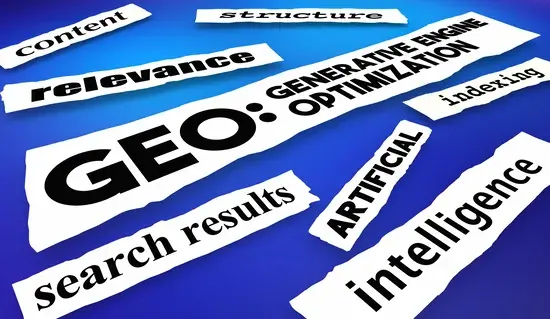
We are moving out of the era of “Standard Search” and into the era of Calgary GEO. AI models like Gemini and ChatGPT don’t just “read” your website; they parse it. They are looking for structured data to help them understand who to recommend.
When an AI is asked, “Who is the best WordPress expert in Calgary?”, it looks for verified entities. If your site uses clean, anchored Schema with unique IDs like /#organization, you are making it incredibly easy for the AI to “verify” your business.
You are providing a clear, technical map that says:
- Who I am: (#organization)
- What I do: (#service)
- Where I am: (#location)
By connecting these dots with fragment identifiers, you aren’t just ranking for keywords; you are becoming a recognized entity in the global knowledge graph. That is how you stay relevant in 2026 and beyond.
The AI Handshake: How llms.txt is the Secret Shortcut to GEO 🤖📜
While most local agencies are still stuck in 2015 obsessing over simple sitemaps, we are already building the next generation of digital handshakes. Fragment identifiers are the foundation, but the llms.txt file is the high-density “cheat sheet” that tells Large Language Models exactly who you are.
AI models don’t want to crawl through 50 pages of corporate bloat—they want the technical truth. This “Anti-Generic” technical edge allows us to:
- Establish Structural Dominance: We use a ruthless heading hierarchy (H1-H6) to show crawlers exactly who owns the local market.
- Reverse-Engineer Success: We audit the technical files of top-performing competitors to keep your brand steps ahead.
- Capture Every Nuance: From your Calgary SEO campaign to your price-beat guarantees, we serve your data on a silver platter for AI discovery.
In the “Blue Sky City,” you need more than a pretty site—you need an architecture that makes sense to the world’s most powerful computers.
Summary: The Technical Advantage 🏆
To the untrained eye, /#organization looks like a typo. To a high-level SEO strategist, it looks like a foundation.
Here is the quick breakdown of why we use it:
- Authority Consolidation: It links all your sub-pages back to one primary brand identity.
- Zero UX Impact: It’s invisible to humans and won’t “jump” the page or cause errors.
- Entity Clarity: It prevents Google from getting confused by duplicate business names.
- AI-Ready: It provides the structured data that modern search engines and LLMs crave.
At 403web, we don’t believe in “generic” websites. We believe in high-performance digital architecture. Sometimes, that means adding a few characters to a URL that no human will ever care about—because those characters are the ones that tell the world’s most powerful computers that you are the authority.
Ready to Build a Site That Actually Makes Sense to Google? 🚀
If your current website feels like a collection of random pages rather than a cohesive brand, it might be time for a technical audit. Let’s make sure your “digital ship” has a captain, a map, and the right code to get you where you’re going. Click here to contact 403web Calgary!