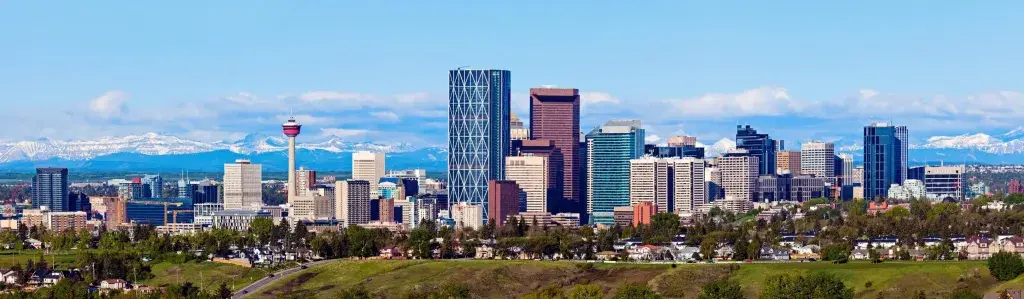
Calgary, AB ranked among Zürich as the third most livable city in the world in 2022. It claimed first place in both Canada and North America. Alberta’s largest city boasts a population of approximately 1.5 million people and stands as Canada’s third-largest city. The North West Mounted Police founded it as a fort in 1875. This metropolis has evolved into a major economic powerhouse since then. We want to explore Calgary’s name origins and geographic location in this complete guide. The city’s history, demographics and features that define this Canadian city will be covered.
What Does Calgary Mean? Origin of the Name
The name Calgary traces back to a small hamlet on Scotland’s Isle of Mull. This connection is more than just geographical coincidence. It reflects the deep Scottish influence that shaped early Western Canadian settlement patterns.
Calgary’s Scottish Heritage
Calgary Castle sits on the picturesque Isle of Mull and overlooks Calgary Bay with its white sand beaches and surrounding farmland. The name derives from the Scottish Gaelic phrase “Cala-ghearridh,” where “Cala” means bay or harbor and “ghearridh” translates to farm or preserved pasture. This description captured the original Calgary House that overlooked the ocean on the Isle of Mull.
Early written records show variation in spelling. Documents from the 1600s referenced the location as Calligourie, Callagorie, and Calligory. A common misconception lasted for years that the name meant “clear running water” in Gaelic. The actual meaning of “bay farm” was far more accurate to describe the Scottish coastal settlement.
Indigenous Names for Calgary
Indigenous peoples had their own names for this land long before Scottish settlers brought their naming traditions. These names remain in use today:
- Moh-kins-tsis (Blackfoot): Means “elbow,” with the longer form Moh-kins-tsis-aka-piyoyis translating to “elbow many houses”
- Wîchîspa Oyade (Nakoda/Stoney): Also means “elbow” and refers to the distinctive river junction
- Guts-ists-I (Tsuut’ina): Another word for “elbow” in the Sarcee language
- Otos-kwunee (Métis/Cree): The Cree term for “elbow” used to describe the region
These names have something in common. They reference the distinctive geographical feature where the Elbow River turns north into the Bow River and creates an elbow-like curve. The Slavey people used a different approach. They called the area Klincho-tinay-indihay, meaning “many horse town,” which focused on the area’s equestrian culture rather than its waterways.
How Calgary Got Its Name
Colonel James Macleod, Commissioner of the North-West Mounted Police, suggested the name in 1876. Born in Scotland, Macleod had spent summers as a frequent guest at Calgary Castle on the Isle of Mull. He proposed naming it after his cousins’ ancestral estate when he returned to Canada and saw the land where Fort Calgary stood.
Macleod believed the Scottish name meant “clear running water,” which he thought appropriate for the location. Despite this misunderstanding about the actual Gaelic meaning, the name stuck. Fort Calgary received its name in 1876, just a year after the fort’s establishment. The settlement dropped “Fort” from its name when it incorporated as a city in 1884.
The dual naming traditions show an important aspect of Calgary, AB. The official name honors Scottish heritage, but the Indigenous names Moh-kins-tsis, Wîchîspa Oyade, Guts-ists-I, and Otos-kwunee remain vital to understanding the complete identity of this place and the peoples who have called it home for generations.
Where is Calgary Located?
Calgary sits at the confluence of the Bow River and the Elbow River in southwestern Alberta. This positioning places the city in a transitional zone between the Rocky Mountain Foothills and the Canadian Prairies and creates a unique geographical and ecological setting.
Calgary’s Geographic Position
The precise coordinates for Calgary, AB are latitude 51.049999 and longitude -114.066666. The city sits at the 51st parallel at an elevation of 1,100 meters (3,600 feet) above sea level. This high-altitude prairie location contributes by a lot to the city’s distinctive climate patterns and scenic vistas.
The provincial capital of Edmonton lies about 300 km (190 mi) to the north of Calgary’s center. Medicine Hat sits 295 km (183 mi) to the southeast, while the Canada-United States border runs about 240 km (150 mi) to the south. Calgary anchors the south end of the Calgary-Edmonton Corridor, a heavily populated urban region that Statistics Canada defines.
Proximity to the Rocky Mountains
The front ranges of the Canadian Rockies rise about 80 kilometers (50 miles) west of Calgary. Residents can see the mountains from the city on clear days. The view is especially striking when early season snow caps the peaks while fall weather persists in the foothills. The drive to Banff takes about an hour and a half. You can spend a full day skiing or hiking in the mountains and return to Calgary the same night.
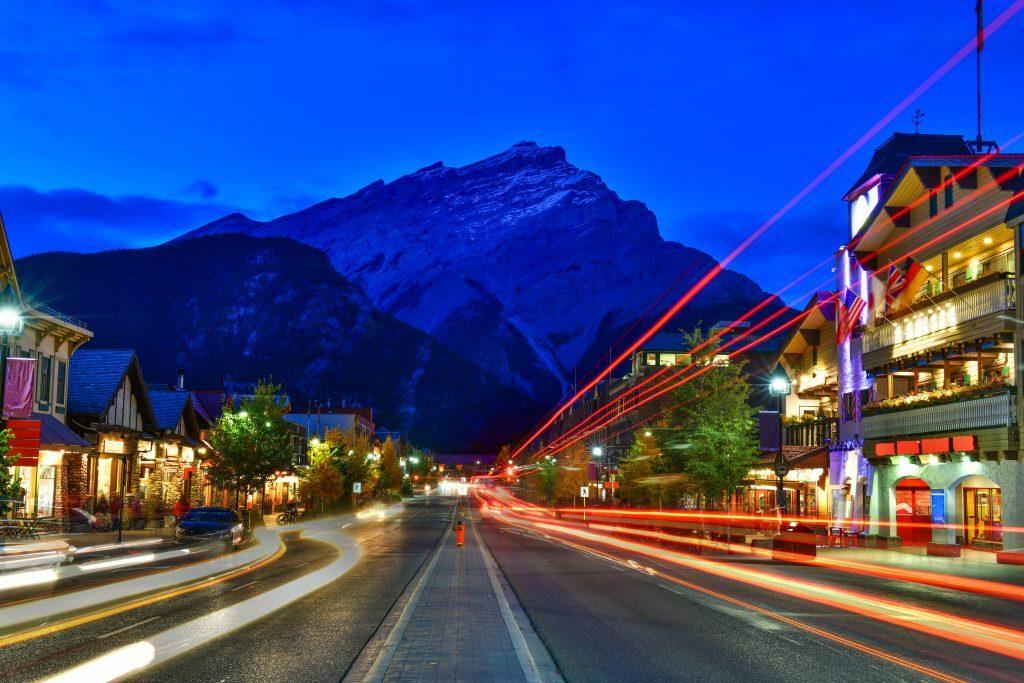
This proximity shapes more than just weekend recreation plans. The mountains influence Calgary’s weather patterns, water supply and overall character. The city exists east of the Rocky Mountains in the Canadian prairies, a region marked by low precipitation and significant temperature variations.
Rivers and Natural Features
Calgary’s water originates in the Rocky Mountains west of the city from watershed systems. The Bow River starts at Bow Glacier north of Lake Louise and winds through the Alberta foothills onto the prairies. The river passes through eleven dams before it reaches Calgary. The Bow River watershed covers an area of 7,770 square kilometers.
The Elbow River brings water from the front ranges and foothills to the Glenmore Reservoir and provides about 40 per cent of Calgary’s water supply. The Elbow Valley watershed spans 1,227 square kilometers. The river stretches 120 kilometers long and passes through four sub-climates before entering the Glenmore Reservoir. The Bow River merges with the Oldman River to form the South Saskatchewan River after leaving Calgary. Waters ended up flowing through Lake Winnipeg to Hudson Bay via the Nelson River.
Climate and Weather Patterns
Calgary experiences a monsoon-influenced humid continental climate with warm, wet summers and cold, dry winters. Temperature ranges average from 16.9 °C (62.4 °F) in July to -7.6 °C (18.3 °F) in January. Winter temperatures drop to or below -20 °C (-4 °F) for 22 days each year on average and reach as low as -30 °C (-22 °F) for 3.7 days per year.
Warm, dry chinook winds interrupt these cold spells often. They blow into Alberta over the mountains and bring dramatic temperature changes. Chinooks can push temperatures to 10 °C (50 °F) during winter, sometimes reaching 15 °C (59 °F). Summer daytime temperatures range from 10 to 25 °C (50 to 77 °F) and exceed 30 °C (86 °F) for an average of 5.1 days during June, July and August.
June ranks as the wettest month with 112.7 millimeters (4.44 in) of precipitation, while January receives only 10.0 millimeters (0.39 in). Calgary International Airport records an average annual precipitation of 418.8 mm (16.49 in), with 326.4 mm (12.85 in) falling as rain and 128.8 cm (50.7 in) as snow. The city has recorded snow every month of the year. Calgary claims the sunniest days year-round among Canada’s 100 largest cities, with just over 332 sunny days and 2,396 hours of sunshine each year. The city lies within Alberta’s Hailstorm Alley and experiences damaging hailstorms every few years. Summer thunderstorms are often accompanied by hail.
History of Calgary, Alberta
The North-West Mounted Police built Fort Calgary at the junction of the Bow and Elbow Rivers in 1875. This set in motion events that would transform a frontier outpost into Alberta’s largest city.
Early Settlement and Fort Calgary
The I.G. Baker Company arrived at the site in July 1875, hired to construct the NWMP outpost. Workers cut spruce and pine logs upstream on the Elbow River and floated them down to the site. They placed the logs upright in a trench to form the palisade. The fort was completed by December 1875 at a cost of $3,449.96 to the Canadian government.
The outpost was known as Fort Brisebois after the commander of ‘F’ Troop and faced challenges from the start. Poor living conditions resulted from inadequate heating and insulation. Combined with Brisebois’ questionable leadership, members of ‘F’ Troop mutinied during the winter of 1875-76. NWMP headquarters renamed the outpost Fort Calgary in June 1876 after determining Brisebois had misused his authority in naming it after himself.
The fort evolved from a simple palisade into a more substantial police presence. The palisade was removed in 1882 when the fort was raised to Divisional Headquarters, and several buildings were razed to accommodate a larger contingent. The NWMP managed to keep operations at the site until 1914.
The Railway Era
The Canadian Pacific Railway reached Calgary in September 1883, and dramatic changes followed. The railway built its station west of the Elbow River in present-day downtown, but most residents lived east of the river in what is now Inglewood. Railway officials moved the post office across the frozen Elbow River one night when the CPR couldn’t convince Calgarians to relocate. This bold move forced businesses and residents to follow and reshaped the town’s layout along the railway tracks.
Oil Discovery and Economic Growth
The Dingman No. 1 well struck wet gas at Turner Valley on May 14, 1914, marking Western Canada’s first commercial oilfield. The discovery sent Calgary into a frenzy. Police controlled volatile crowds of investors, money poured in so fast it was collected in wastepaper baskets, and stock values quadrupled in hours. Calgarians withdrew nearly $696,680.10 in savings within days to invest in almost 500 oil companies.
Turner Valley became Alberta’s primary oil producer, and petroleum firms built their headquarters in Calgary, AB. By the time Imperial Oil made its discovery at Leduc in 1947, Turner Valley had produced 95 per cent of Canada’s total oil output at its peak.
Modern Calgary Development
Calgary solidified its position as Canada’s energy capital after decades of oil industry growth. The city purchased the Fort Calgary site in 1975 and reopened it as Fort Calgary Historic Park in 1978. This marked a commitment to preserving Calgary’s origins while continuing to build a modern urban center. Calgary’s also home to 403web design & development company.
Calgary’s Population and Demographics
As of April 1, 2024, Calgary, AB reached an estimated population of 1,491,900. This represented a growth rate of 4.9 per cent since April 2023. About 69,000 new residents arrived, one of the most important annual increases in Calgary’s history. The growth was equivalent to relocating the entire population of Medicine Hat to the city. The 2021 Census recorded Calgary’s population at 1,306,780, representing 30.7% of Alberta’s total population.
Current Population Statistics
The city experienced unprecedented growth during 2024. Statistics Canada estimated Calgary’s population at 1,569,133, reflecting an increase of more than 90,000 residents from 2023. The City of Calgary provided a more conservative estimate of 1,509,800 for the same year. Population projections suggest Calgary will reach 1,562,600 in 2025, with forecasts showing 1,660,100 by 2029. The Calgary census metropolitan area stood at 1,481,806 in 2021. This is a big deal as it means that the area is projected to exceed two million by 2029.
Cultural Diversity and Communities
Calgary ranks as the third most diverse major city in Canada and is home to over 240 different ethnic origins. About 28.1% of Calgarians were born in a country other than Canada. About 53 per cent of the population identified as having a European ethnic origin in 2021. English was the most frequently reported ethnic origin at 16.7% of the total population. Scottish followed at 14.4% and Irish at 12.4%.
South Asian represented the largest racialized group at 10.5% among visible minorities. Chinese factored in at 6.4% and Filipino at 6.1%. The total visible minority population reached 38.8% in 2021. Black residents factored in 5.2%, while Latin American communities each contributed approximately 4.2% of the population.
Language and Religion
97.4 per cent of Calgary’s population had knowledge of English in 2021. About 40 per cent of the population had knowledge of at least one non-official language. The top non-official languages spoken included Tagalog, Punjabi, Spanish, Mandarin and Hindi. Punjabi ranked as the most common mother tongue language, followed by Tagalog and Cantonese.
Catholics formed the largest religious group at 20.0% in 2021, with other Christians comprising 14.0%. The population declaring no religion and secular views numbered 576,025 persons, representing 39.3%. Sikh 3.8%, Hindu 2.6%, and Buddhist 1.6% of the population.
What Calgary is Known For
Calgary, AB has built a reputation well beyond its city limits. Rodeo culture and energy sectors give this city distinctive attractions and industries that shape its identity.
Calgary Stampede and Western Heritage
The Calgary Stampede attracts over one million visitors each year to what it bills as “The Greatest Outdoor Show on Earth”. This ten-day event happens every July and features the world’s largest outdoor rodeo with CAD 3.02M in prize money. Seven major rodeo disciplines take center stage. Chuckwagon racing draws massive crowds for what locals call the “half-mile of hell”.
Economy and Oil Industry
Calgary serves as Canada’s energy capital. Headquarters for almost every major company throughout the energy-value chain are located here. The Alberta Energy Transition Study forecasts CAD 84.99 billion to Alberta’s GDP by 2050. Alberta produces about three-quarters of Canada’s crude oil and natural gas. The province holds the third largest crude oil reserves globally.
Sports and Recreation
Professional sports thrive here. The Calgary Flames compete in the NHL and the Stampeders play CFL football. The Roughnecks bring National Lacrosse League action. Cavalry FC represents the city in the Canadian Premier League.
Arts and Culture
Arts Commons ranks as one of Canada’s largest arts centers. The city supports festivals and public art programs that showcase Indigenous artists.
Education and Research
The University of Calgary operates as one of Canada’s top research universities. It focuses on community-engaged scholarship.
Conclusion
Calgary represents much more than Canada’s third-largest city. This metropolis blends Western culture, urban sophistication and natural beauty. Its dual heritage honors both Scottish settlers and Indigenous peoples. The city holds its position as the nation’s energy capital. The distinctive geography at the confluence of two rivers creates opportunities you won’t find elsewhere in Canada when combined with proximity to the Rockies. Whether you’re drawn to the Calgary Stampede or world-class research institutions, Calgary is evidence of what makes Canadian cities exceptional.